


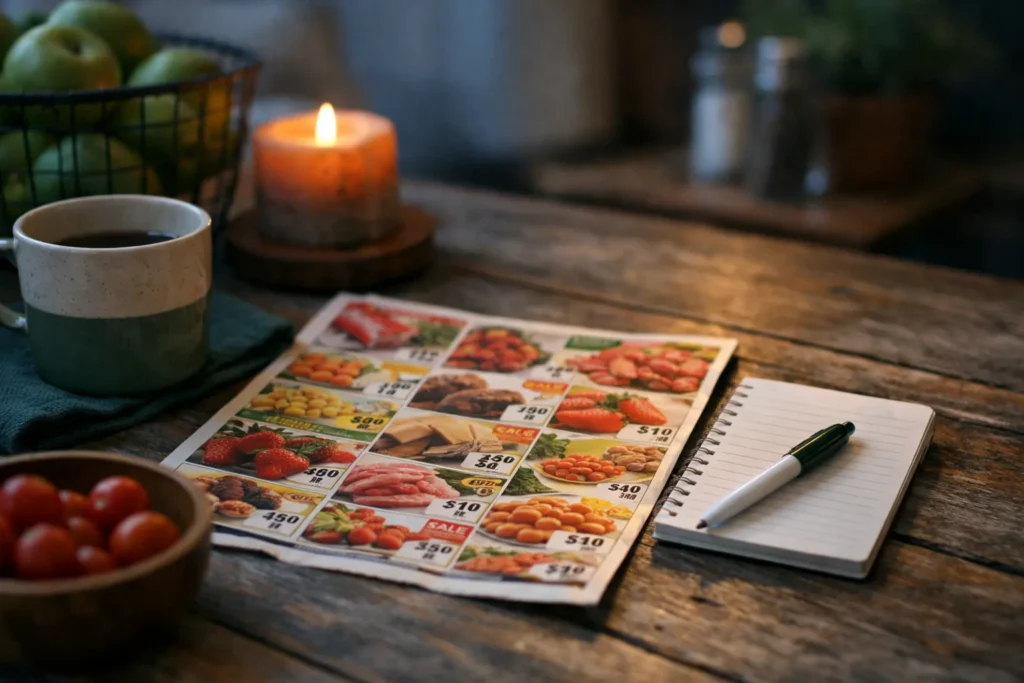
Most people write a grocery list and then check the ad. Flip the order. Starting from the weekly circular tells you which items are truly cheap this week, and you can build meals around them. Whether you live in Grand Rapids, Ann Arbor, or a small town in the Upper Peninsula, the method works the same way.
Skim for staples first
Open the ad on the day it comes out and look at the front page, where stores usually place their best offers. Then scan for foods you already cook: chicken, eggs, rice, pasta, frozen vegetables, apples, and canned tomatoes. Circle three to five items that are at a clearly lower price than usual. If you keep a price notebook, compare each sale price with your lowest recorded one.
A real bargain generally looks like a price you have not seen in a month or more. Be wary of labels such as “10 for $10,” which do not always require you to buy ten, and check the fine print before you stock up. Seasonal produce from the U.S. Department of Agriculture harvest calendar is usually cheapest when it is in season locally, and Michigan is known for apples, cherries, blueberries, and asparagus at different points in the year.
Build meals around the sale items
With your circled items, sketch four or five dinners. A cheap whole chicken becomes roast chicken one night, soup the next, and sandwiches for lunch. A sale on pasta and canned tomatoes makes an easy weeknight meal. Add a vegetable and a pantry staple to each plan.
Then write the list, grouped by store section so you do not wander. Check your fridge and pantry before you finalize it, so you do not buy duplicates.
Avoid the extra-buy trap
An ad can tempt you as easily as an aisle. Keep these habits:
- Buy only what you will use before it spoils.
- Ignore “doorbuster” deals on items you would not otherwise buy.
- Set a spending cap for the trip, and keep a running total on your phone.
- Shop once a week where you can, since every extra trip adds extra purchases.
Review after the trip
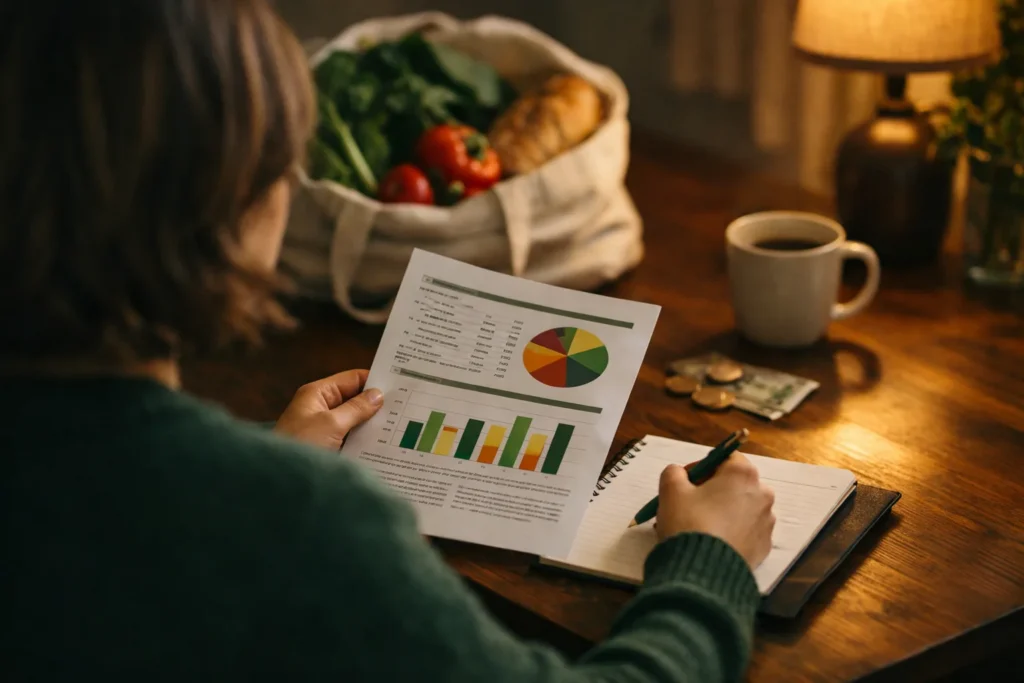
When you get home, compare the receipt with the list. Note what you bought off-list and why. After a few weeks, you will notice a pattern, and the pattern tells you what to plan for next time.