
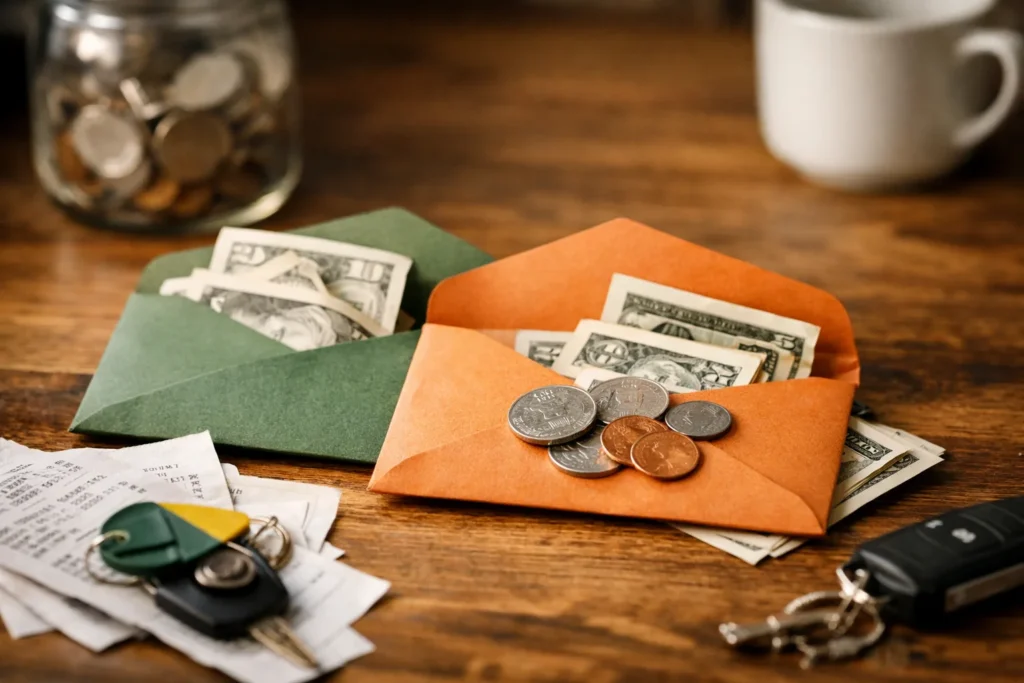
The cash envelope method is one of the oldest budgeting tools around: you withdraw a set amount of cash for a spending category, put it in an envelope, and stop spending when the envelope is empty. It sounds almost too simple. This guide follows an illustrative Ohio household through six months of using it for the two categories that tend to run away from people, groceries and gas, and then looks at where the method helps and where it gets in the way. The figures are examples, so replace them with your own.
Why envelopes still appeal
Paying with a card makes spending painless. Cash makes it visible. You can see the envelope thinning and you feel the limit in your hand, which is a surprisingly effective brake. Research summaries from the Federal Reserve on payment habits have long noted that people use cash and cards differently, with cash often used for small everyday purchases, and the envelope method takes advantage of that psychology.
It is not magic. The method works because it forces a decision in advance and creates a hard stop. A household that already tracks spending closely may gain little from it, while one that routinely overshoots on food may find it clarifying.
The setup
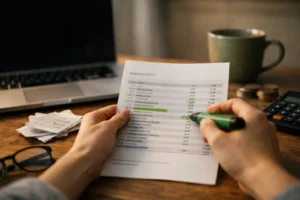
Imagine a family of four in suburban Ohio. Before starting, they review the last three months of statements and find these averages: $820 a month on groceries and $260 on gas. They decide to cut groceries modestly and keep gas steady, rather than aim for dramatic changes.
- Set the monthly amounts. Groceries: $760. Gas: $250. Total cash: $1,010 per month.
- Split by pay period. With a paycheck every two weeks, they withdraw half of each amount on payday: $380 for groceries and $125 for gas.
- Label two envelopes. One for groceries, one for gas, with the start date written on the front.
- Keep a slip. Each time cash comes out, the amount and purpose are noted on a small card inside the envelope.
- Decide the rules for leftovers. Any money still in an envelope at month’s end moves to a savings jar, not to the next month’s budget, at least at first.
Month by month
The first month is mostly learning. The grocery envelope runs out on day 24, and the family covers the last week with pantry meals, which turns out to be useful because it uses up forgotten items. The gas envelope has about $20 left, which a family member rounds up into the jar.
In the second month, the household adjusts. They shop with a list, buy store brands for staples, and use the weekly ad to guide meals. The grocery envelope finishes with $35 to spare. That success feels good, and the family talks about whether to keep the same amount or lower it again. They keep it, since a stable number is easier to follow.
The third month brings a snag. A week of unexpected travel for a funeral leaves the gas envelope empty with ten days to go. The family faces the classic envelope question: do you borrow from another envelope, use a card, or wait? They decide on a rule: a small, written-down transfer from the grocery envelope is allowed once a month, with the amount noted on both slips. That rule keeps the system from collapsing over one bad week.
By month four, the habits are in place. Shopping trips are faster because the list is firmer, and the family notices fewer last-minute stops. In month five, a holiday weekend pushes grocery spending above the envelope, so the family plans ahead the next time by adding a small holiday line to the budget. In month six, they look back and tally the results.
What worked
- The visible limit. Seeing the envelope shrink changed behavior more than any spreadsheet had.
- The shared rules. Writing the rules on the envelope prevented arguments about what counted.
- Pantry weeks. A tight last week of the month encouraged creative cooking and cut waste.
- The savings jar. Leftover cash gave a small, tangible reward for staying within the limit.
What got in the way
- Safety and convenience. Carrying large amounts of cash is risky, and losing an envelope means losing the money. Leave unused envelopes at home in a secure spot.
- Prices at the pump. Gas prices move, so a fixed gas envelope can come up short in a month when the price rises. Adjust the amount, but do it on a schedule, not mid-month.
- Online and automatic bills. Envelopes cannot pay for anything online, so they work only for in-person purchases.
- Loss of rewards and records. Paying in cash means no card statement to review. The slips inside the envelope become your only record, so keep them carefully.
- Embarrassment at the register. Some people dislike counting out cash in line. A smaller number of bigger bills can help.
A hybrid that many households end up with
After six months, many households keep the envelope for the single category that gave them trouble, usually groceries or dining out, and return to a card for everything else. Others move to a prepaid or separate debit card loaded with the same amount, which keeps the hard stop without the physical cash. If you try that, check the terms for fees yourself, since we do not recommend any specific account or card.
When to stop using envelopes
The method is a tool, not a life sentence. Consider stepping back if:
- You have stayed under the limit for three or four months in a row without effort.
- The envelopes cause more stress than they relieve.
- Your spending is mostly online or automatic, which cash cannot handle.
- Your income or expenses have changed enough that the old amounts no longer fit.
When you stop, do not simply return to the old habits. Keep the monthly targets you proved and track them on a card or a spreadsheet. The Budgeting basics section shows how to build a simple monthly plan that carries the lessons forward.
Try it yourself
Start small and run it for two or three months before judging. Pick one category, set an amount based on your own statements, label an envelope, and write the rules on the front. Keep notes on what happens, and remember that no method guarantees savings. The aim is simply to learn how your household behaves when the limit is real, and that knowledge is useful whether you keep the envelopes or retire them.