




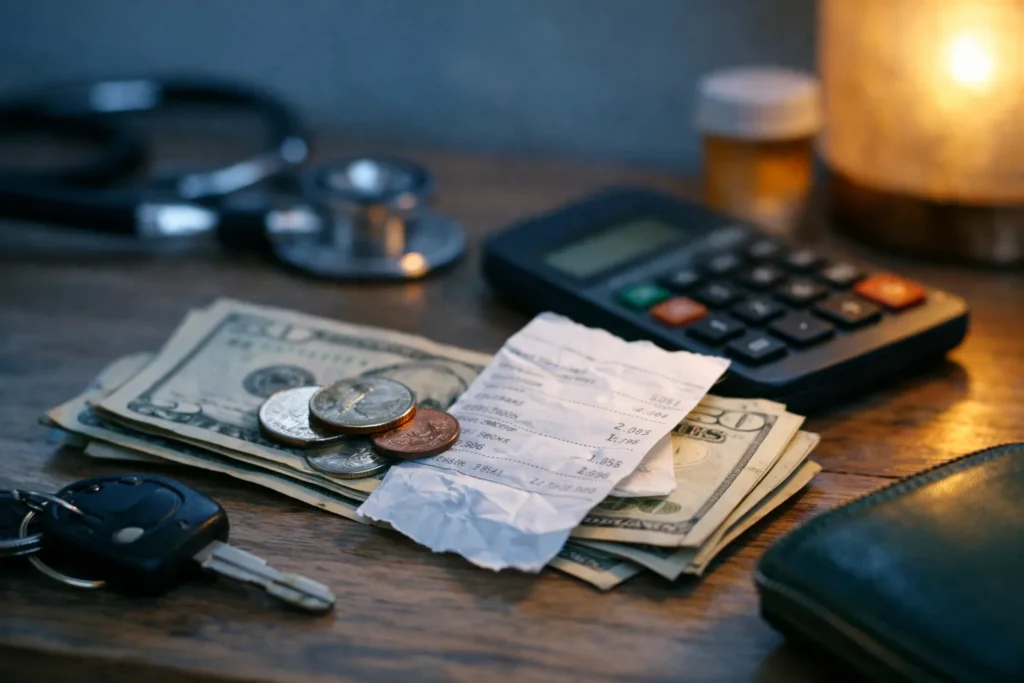
Every year the Federal Reserve asks thousands of American adults a very small question with a big answer: if you had an unexpected expense of $400, how would you pay for it? The way people reply says a lot about how fragile or sturdy household finances really are, and it points to a modest goal anyone can start on this week.
What the survey is
The Federal Reserve Board runs the Survey of Household Economics and Decisionmaking, usually shortened to SHED. It collects responses from a large national panel and covers income, savings, borrowing, housing, and retirement. The $400 question has been a fixture for years, and the Board of Governors describes it this way:
The survey asks adults how they would cover a hypothetical $400 emergency expense, and whether they would pay with cash or its equivalent, or by borrowing or selling something.
— Board of Governors of the Federal Reserve System, paraphrasing its annual report on the economic well-being of U.S. households
The key phrase is “cash or its equivalent.” That means money in a checking or savings account, or a card that is paid off at the next statement. Using a card and carrying a balance does not count as covering the cost with cash. It counts as borrowing.
What the results look like
In recent years, roughly six in ten adults have said they could cover the $400 expense entirely with cash or its equivalent. The rest said they would borrow, sell something, or could not pay at all. Check the Federal Reserve site for the latest report, because the percentages move a little each year, and be wary of any article that quotes a number without a date.
Two patterns repeat. Households with lower incomes are less likely to have the cushion, and so are adults without a college degree. The survey also shows that unexpected bills are not rare: car repairs, medical costs, and home repairs show up again and again in the list of surprises families faced in a year.
Why $400 and not $4,000
Four hundred dollars is not a recommended emergency fund. Many consumer agencies suggest building toward several months of expenses, and that is a long road. The $400 figure is a measuring stick: it is small enough that nearly every household has faced an expense about that size, and large enough that it can hurt when you are not ready.
It is also a good first target. A goal that is tiny, specific, and reachable helps you start, and starting is the hard part.
Starting with a tiny amount
If the idea of saving $400 feels heavy, shrink the steps rather than the goal. Here is a simple plan to adapt.
- Open a separate account or labeled savings pot. It should be easy to reach but not so easy that you dip into it for dinner.
- Pick a weekly amount you will not miss. Five dollars a week reaches $260 in a year; ten dollars reaches $520. Choose a number your budget can carry without strain.
- Automate the transfer for payday. Moving money before you see it removes the daily decision.
- Add windfalls. A refund, a returned deposit, or a month with an unexpectedly low utility bill is a good moment to add a lump sum.
- Track it in one line. A notebook or spreadsheet cell with the running balance is enough.
The Census Bureau publishes data on household income and expenses at census.gov that can help you see how your own spending compares with households in your area, though your receipts are always the better guide.
What counts as an emergency
Decide the rules ahead of time. A tire blowout, a vet visit, a copay, or a broken water heater qualifies. A sale you did not expect does not. Writing a short list of what the fund is for makes it easier to protect when a tempting purchase comes along.
After you reach $400
Do not stop. Pause for a month, celebrate in a way that costs nothing, and then pick the next step. Some households aim for one month of essential bills, others for a car repair and a medical deductible. You do not have to decide today. Whatever the target, keep the weekly transfer going at the same amount if you can; the habit is more valuable than the figure.
If bills make saving difficult, look at the fixed side of the budget first. The Bills and home section explains how to read utility statements and spot costs worth questioning.
A caution about borrowing for emergencies
The SHED results show many people covering surprise costs with credit. That can work in a pinch, but interest turns a $400 repair into a larger bill over time. If you rely on a card, pay it down as quickly as you can and consider talking to a nonprofit credit counselor or another qualified professional if the balance is growing. This site does not offer personal financial advice; it exists to help you organize and compare.