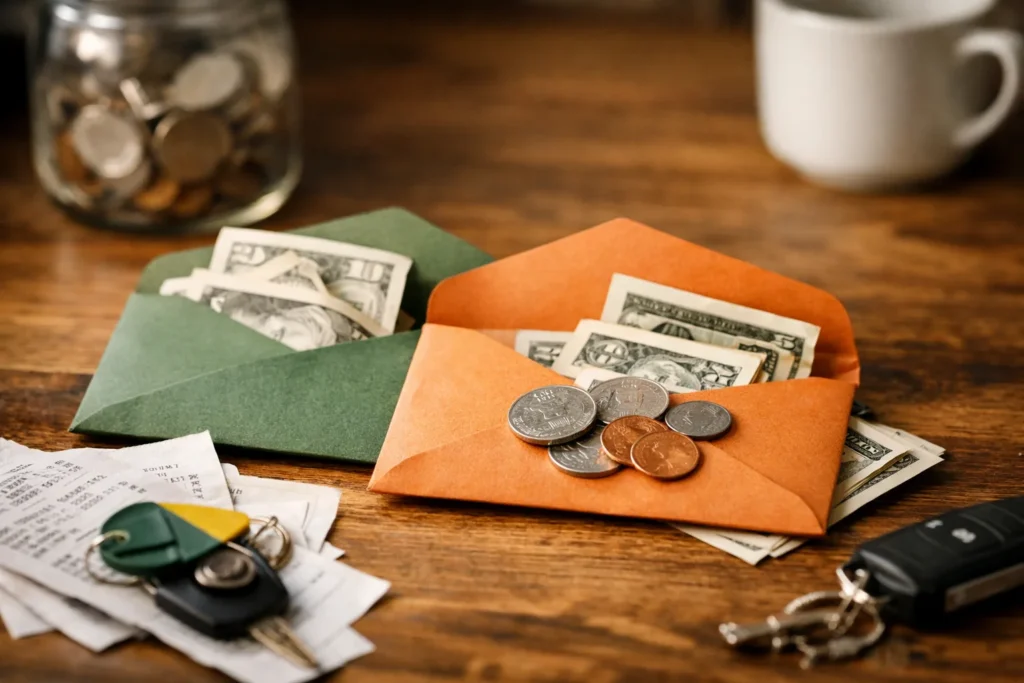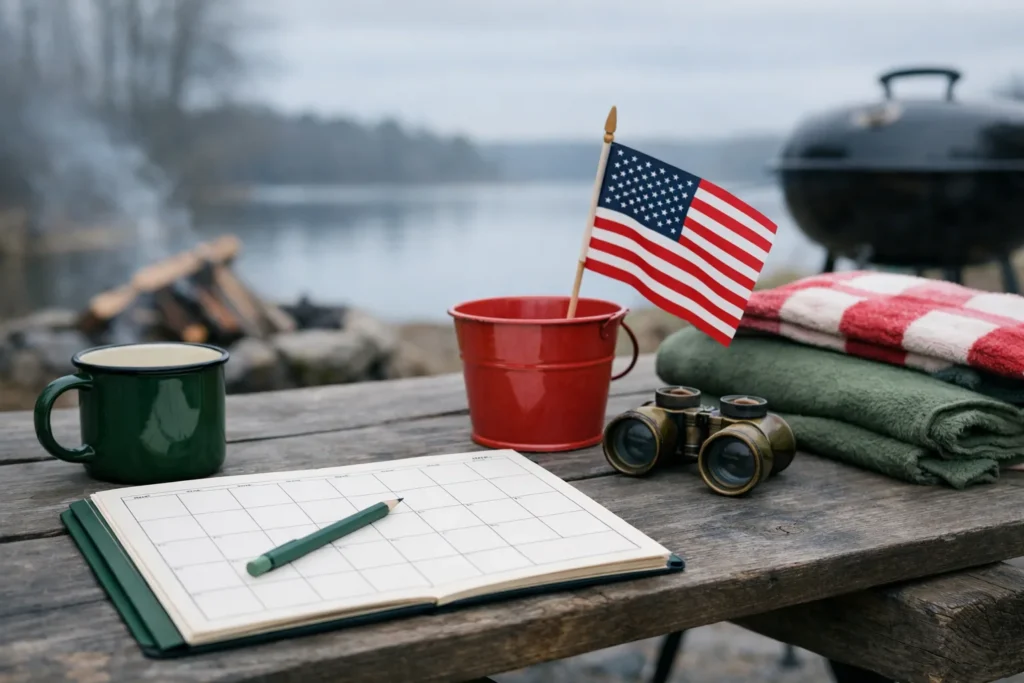



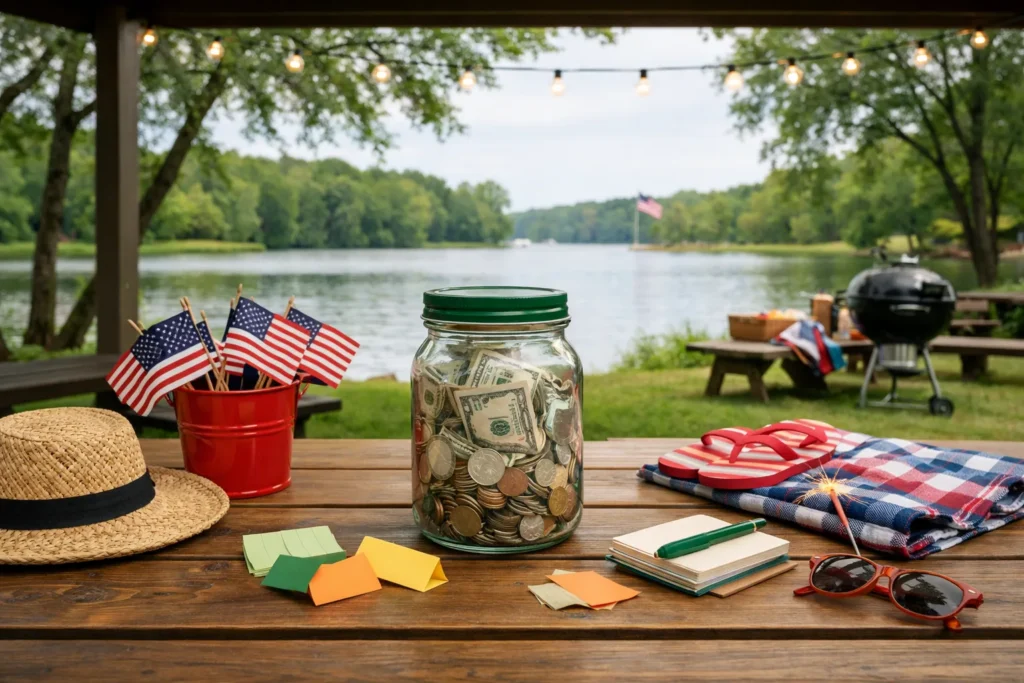
Most savings challenges run for a full year and quietly fade by March. This one is short on purpose: about ten weeks, a jar you can see, and a finish line that lands on a holiday weekend. It starts in May and ends the weekend of the Fourth of July, so the payoff is a small treat or a head start on summer bills.
What you need
- A clear glass jar or any container you can see through. Seeing it fill is half the motivation.
- A printed calendar from the first week of May through the first week of July.
- A pen, taped to the wall next to the calendar.
- A target. Pick a number that is realistic for your household, for example $150, $250, or $400.
Choose the target by looking at your actual last three months. If you can only set aside $10 a week, a $100 jar is a win. The challenge works when you finish it, not when you copy someone else’s number.
How the weeks work
Each week you do one small thing that puts cash or a transfer in the jar. The habit changes with the month to avoid boredom. At the end of every week, drop in the money and check the day on the calendar. If you use a digital version, move the same amount into a savings pot and keep the jar for the visual.
| Month | Jar target | Weekly habit | Notes |
|---|---|---|---|
| May | $40 to $60 | Drop in the cash from one skipped takeout or coffee run each week | Count the first week from the date you start, not the calendar month |
| June | $70 to $100 | Add the difference when a grocery trip comes in under your list total | Keep the receipt in a drawer and compare on Sunday |
| Early July | $40 to $60 | Add a lump sum from one item you sold, a returned deposit, or a refund | Plan the holiday weekend before you open the jar |
The target column adds up to roughly $150 to $220, which is a range, not a promise. Adjust each row up or down to match your income.
Making the habit stick
Habits survive when they are attached to something you already do. Tie the jar to a weekly anchor: Friday evening, payday, or Sunday meal planning. Put the jar where you will see it every day, not in a closet. When you skip a week, do not try to double up. Just carry on with the next week and extend the finish date if you need to.
Give yourself a no-guilt rule for the bad weeks. A flat tire or a doctor’s copay is a reason to leave the jar alone, not a reason to quit. If you must dip into it, write down the amount and the reason on the calendar so that you can top it back up later.
Free ways to fill the jar
- Cash from a clean-out. Sell a few things you no longer use and put the full amount in the jar.
- A dollar for every skipped impulse. If you walk away from an unplanned purchase, pay the jar what you did not pay the store.
- Loose change. Empty your pockets and purse into the jar at the end of each day.
Planning the holiday weekend
The Fourth of July is the finish line, so decide in advance how to use the money. Some households put it toward a cookout, a picnic, or a weekend outing. Others transfer the whole jar to a savings account and start a new one in the fall. Either choice is fine as long as you decide before the day arrives, so that the reward does not turn into an impulse buy.
Many cities host free events on the holiday. In Portland, Oregon, for example, waterfront gatherings and parks fill up with people on the Fourth of July, and plenty of public events charge nothing to attend. Check your city’s official calendar rather than relying on word of mouth, since schedules and rules change from year to year.
After the Fourth
Count the jar, write the total on the calendar, and take a photo if you like. Then choose what comes next. You can keep the weekly habit going at the same amount, raise it slightly, or begin a different challenge in the fall. The Consumer Financial Protection Bureau offers free budgeting worksheets that fit well alongside a jar challenge, and the Everyday savings section has more small habits to try.
The most useful thing this challenge teaches is not the total. It is that ten weeks of small, repeated effort is enough to build something, which makes the next challenge easier to start.