



Water bills tend to creep up unnoticed. The good news is that the most expensive problems are often the cheapest to find: a running toilet, a dripping faucet, or a pipe leaking under the sink. This guide lists the checks to do first, in order, and then explains what the EPA’s WaterSense label means when you are ready to replace a fixture.
Start with the meter
Find your water meter, usually in a box near the street or in a basement or utility area. Make sure no water is running anywhere in the house, then read the meter and look at the small leak indicator, often a triangle or a dial that spins when water moves. Wait 15 to 30 minutes, then read it again. If the numbers changed, water is going somewhere. If you rent, tell your landlord right away.
The U.S. Environmental Protection Agency explains simple leak detection and the WaterSense program at epa.gov. The agency notes that household leaks can waste a surprising amount of water over a year, so a quick check is worth the effort.
Check the toilets
Toilets are the most common source of silent leaks. Add a few drops of food coloring to the tank, wait ten minutes without flushing, and look at the bowl. If color appears, the flapper is leaking and probably needs replacing, which is an inexpensive part you can usually fit yourself. If you hear a toilet refilling when no one has used it, treat that as a warning sign as well.
Check faucets, showerheads, and hoses
- Dripping faucets. A drip every second adds up to many gallons per month. Worn washers and cartridges are the usual cause.
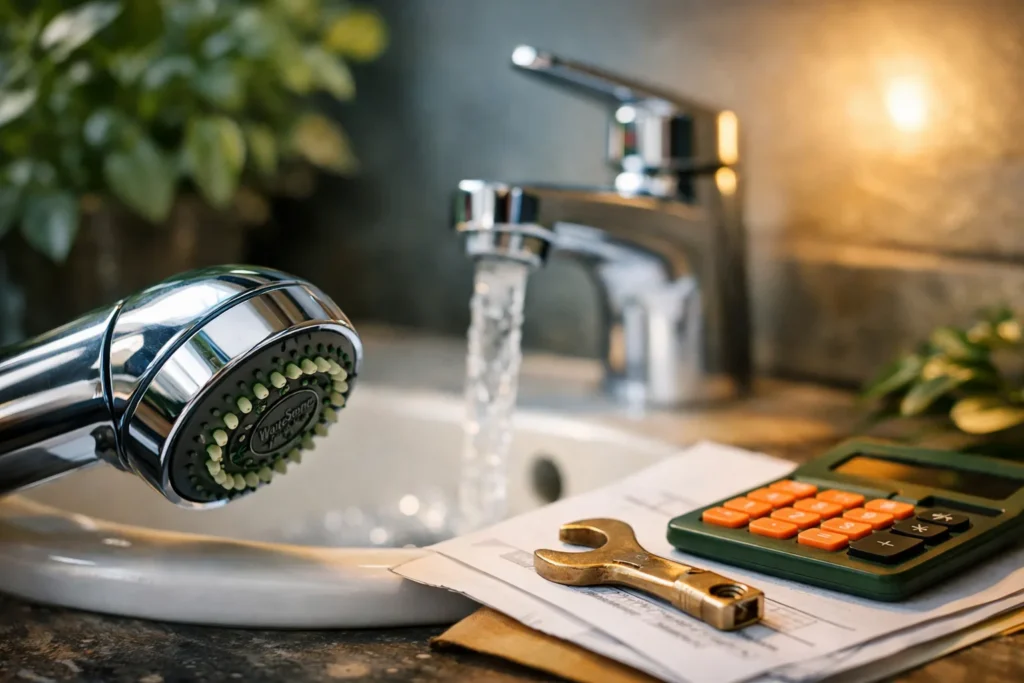
- Showerheads. Time a shower and check the flow rating stamped on the showerhead, often in gallons per minute. Older models use more water than newer ones.
- Under-sink connections. Run a dry paper towel along supply lines and look for dampness.
- Outdoor spigots and hoses. Check for drips at the connection and for a hose left on a timer.
What the WaterSense label means
WaterSense is a voluntary EPA label for products that use less water and meet performance criteria. It applies to toilets, bathroom sink faucets, showerheads, and some irrigation controls, among other items. A labeled toilet, for example, uses no more than 1.28 gallons per flush, while labeled showerheads use no more than 2.0 gallons per minute. A product with the label has been independently certified to meet these requirements.
The label does not tell you whether replacing a working fixture will pay for itself. If your toilet is from the 1990s, the savings can be meaningful. If it is already efficient, the return is slower. Check the date and flow rating before buying anything.
A sensible order of operations
- Read the meter for leaks.
- Fix toilet and faucet leaks, since they cost little.
- Replace worn showerheads or add aerators if the flow is high.
- Replace old toilets only if they are inefficient or leaking repeatedly.
Look for local help
Some water utilities and local governments provide free leak-detection tips, kits, or rebates for efficient fixtures. In Portland, Oregon, the Portland Water Bureau publishes conservation tips and information on rates, and other cities have similar pages. Visit your own utility’s website to see what is offered, since programs vary and change.
Read your water bill
Water bills usually show usage in hundred cubic feet or in gallons, along with fixed fees and sewer charges. Compare your usage with the same period last year. A spike without a clear reason, such as filling a pool or watering a new lawn, is a hint to run the leak test again. If you cannot find the cause, ask your utility whether it can check the meter.
For more ways to understand the bills that hit your account every month, see the Everyday savings section, which covers tracking and trimming recurring spending.