



Before you buy a gadget or tinker with a thermostat, it helps to know where energy is actually used in a home. The U.S. Energy Information Administration studies this through its residential survey and publishes the results for anyone to read. Here is what the data says in broad terms and how to use it to decide where your own attention should go first.
What the EIA measures
The EIA is the statistical agency of the U.S. Department of Energy. It surveys thousands of households to see how they use energy for heating, cooling, hot water, lighting, appliances, and electronics. The agency summarizes its findings this way:
Space heating, air conditioning, and water heating together account for the largest share of energy use in a typical U.S. home, though the mix varies by climate, home size, and fuel type.
— U.S. Energy Information Administration, paraphrasing its residential energy consumption findings
That sentence is worth keeping in mind, because it explains why a house in Minnesota and a house in Florida should not chase the same savings.
The big categories
- Space heating. In colder regions this is typically the largest single use, and it shows up on electric, gas, or heating oil bills depending on the fuel.
- Air conditioning. In the South and Southwest, cooling climbs to the top of the list during summer.
- Water heating. A steady year-round use that depends on the number of people in the household and how hot the water is.
- Appliances and electronics. Refrigerators, dryers, washers, televisions, and computers add up to a significant share, although each one alone is small.
- Lighting. Once a large item, now much smaller in homes that have switched to efficient bulbs.
What to look at first at home
Because heating, cooling, and water heating dominate, start there. Small changes in these areas move the bill more than anything you do with a phone charger.
- Check your thermostat settings. Dropping the heat a few degrees in winter, or raising the setting in summer, can change energy use. Make changes gradually and judge by comfort.
- Look at your water heater setting. Many are set higher than needed. Check the label and the manufacturer’s guidance before adjusting, and note that water that is too cool may not be safe for dishwashing or for people with certain health conditions.
- Seal air leaks. Weatherstripping and caulk around doors and windows are inexpensive and reduce drafts.
- Change filters. A clogged furnace or air-conditioner filter makes the system work harder.
Using Energy Star as a guide
When an appliance needs replacing, the government-backed Energy Star label identifies models that meet energy-efficiency requirements. The program’s site at energystar.gov includes product finders and tips for homeowners and renters alike. A label does not mean a purchase pays off; consider the price difference, how often you use the appliance, and the age of the one you are replacing.
Do your own breakdown
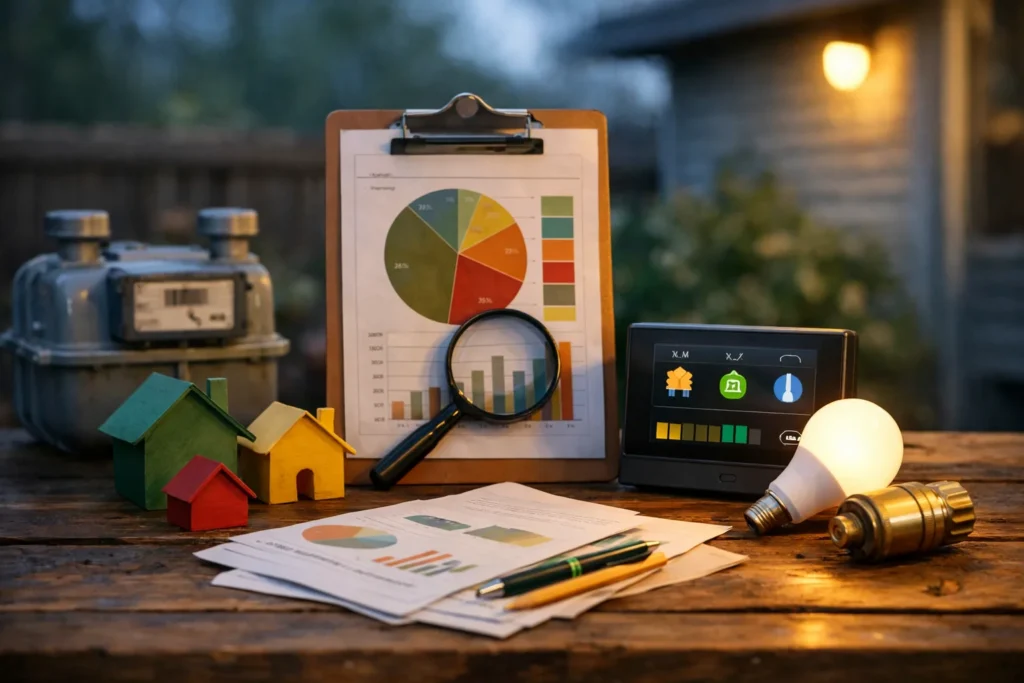
You do not need an energy audit to get a rough picture. Collect twelve months of bills for each fuel you use. Write the monthly totals in a spreadsheet and make a simple chart. The months with the lowest use show your baseline, which is the cost of running the house without much heating or cooling. The difference between that baseline and your peak months is the seasonal part, and it is where changes in thermostat habits or insulation will show up.
If you want to compare your numbers with national figures, the EIA website offers tables on average household energy use and costs by region. Remember that averages blur differences: a house with a gas furnace and an electric dryer does not look like a house with a heat pump and a gas dryer.
Where the biggest savings tend to hide
Look at these in order, and stop when you find something worth fixing:
- A water heater that runs constantly because of a leak or a failed thermostat.
- A heating or cooling system that is old, undersized, or poorly maintained.
- An uninsulated attic that lets heat escape in winter and enter in summer.
- A second refrigerator in the garage that runs year-round and is nearly empty.
None of these is a guarantee of savings, because every home is different, but they are the places the data points to. For more on reading the bills behind these numbers, visit the Budgeting basics section and set up a monthly tracking sheet.