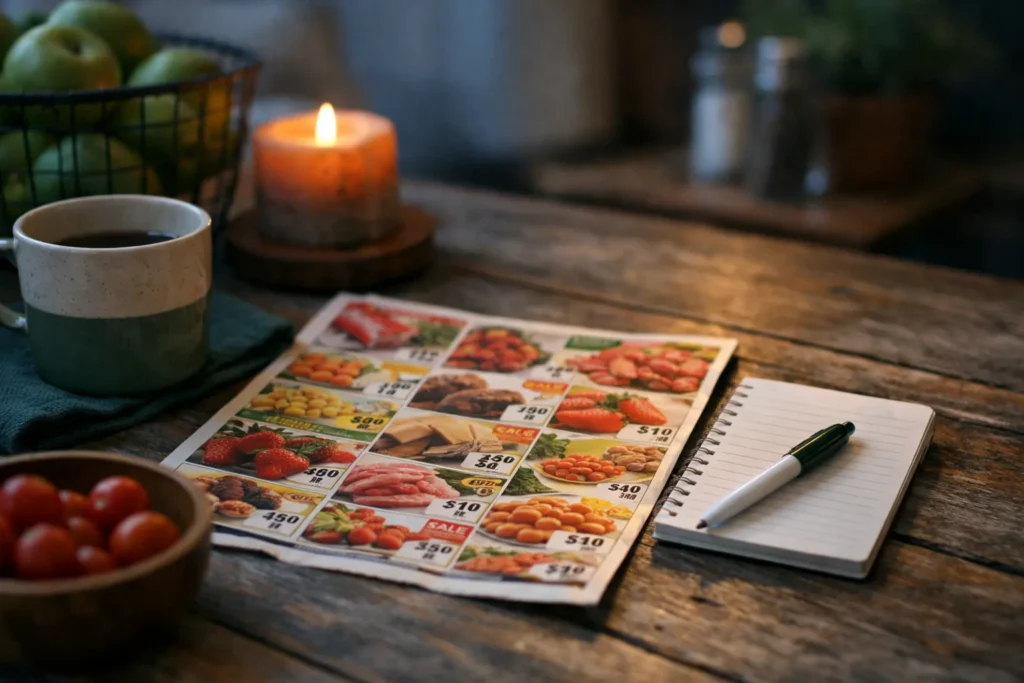



A shelf holds two boxes of the same cereal. One is $4.29 and one is $6.49. Which is the better deal depends on how much is inside each, and that is exactly what unit pricing answers. Many states, including Georgia, have rules about how unit prices must be displayed in stores, and the technical standards behind them come from the National Institute of Standards and Technology. You can read the model rules in NIST Handbook 130, and the Georgia Department of Agriculture oversees weights and measures in the state.
How to read the shelf tag
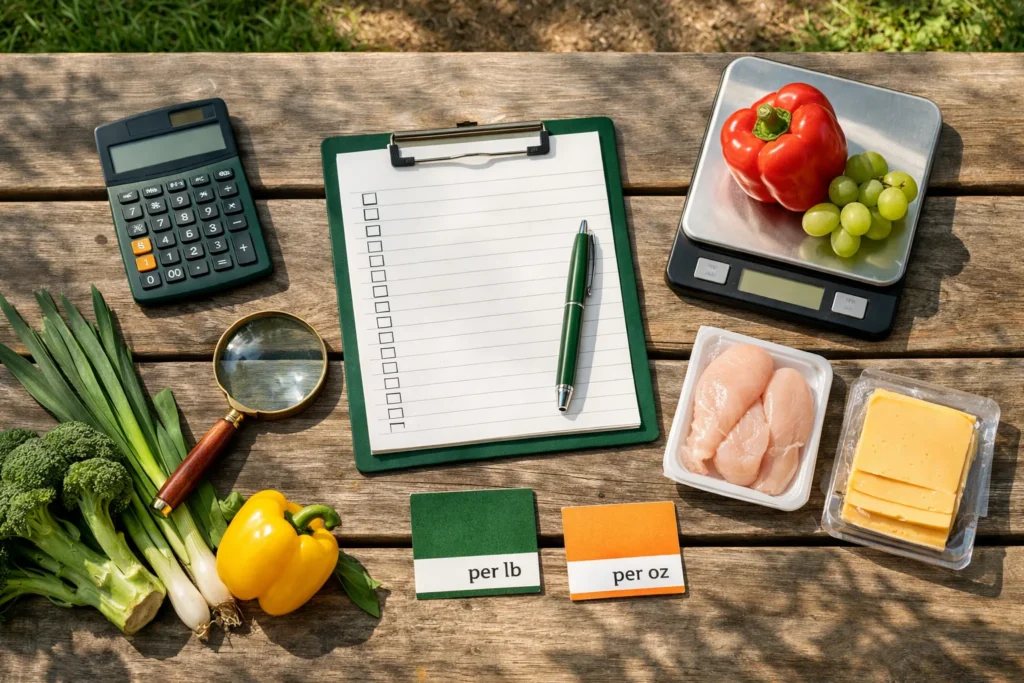
On most shelf labels, the unit price is printed in small type near the product’s total price. It looks like “$0.28/oz” or “$1.15 per 100 sheets.” The label tells you how much you pay for one standard unit, whether an ounce, a pound, a quart, or a count. If two products use different units, such as ounces on one tag and pounds on the other, convert them to the same unit before comparing. There are 16 ounces in a pound, so $0.30 per ounce equals $4.80 per pound.
Keep a price notebook
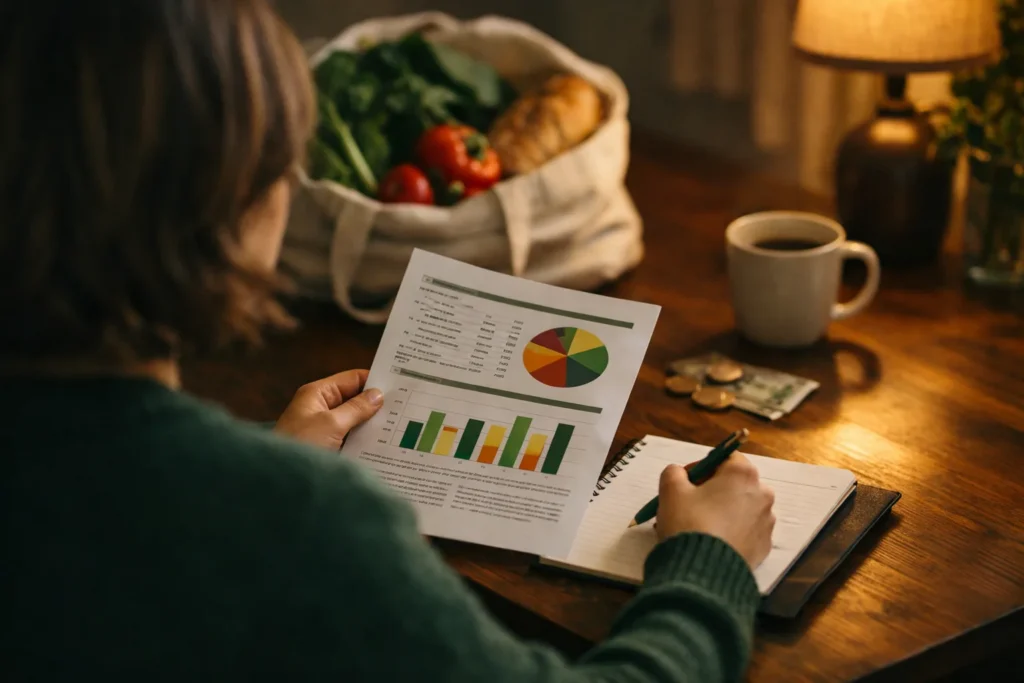
Memory is a poor tool for comparing prices. For the dozen items you buy most, record the best unit price you have seen and where. After a few trips, you will know what a good price looks like. A short list gives you a sense of whether a sale is truly a sale. Here is a sample page from such a notebook.
| Item | Package size | Price | Unit price |
|---|---|---|---|
| Rolled oats | 18 oz | $3.60 | $0.20 per oz |
| Rolled oats | 42 oz | $6.30 | $0.15 per oz |
| Canned black beans | 15 oz | $1.05 | $0.07 per oz |
| Dry black beans | 32 oz | $2.88 | $0.09 per oz |
| Cooking oil | 48 oz | $5.76 | $0.12 per oz |
| Cooking oil | 128 oz | $16.64 | $0.13 per oz |
The numbers above are invented for the example, so replace them with the prices at your own store.
What the example shows
The two oat packages show the usual pattern: the larger container costs less per ounce. The oil lines show the exception. The jumbo bottle is slightly more expensive per ounce than the mid-size one, which means the biggest package is not always the best deal. The beans reveal a third lesson: canned black beans can show a lower unit price than dry beans on the sticker, although dry beans yield more servings once cooked, because they absorb water. Compare cost per serving when the products differ in form.
When the bigger package saves nothing
A large size loses its advantage when:
- You cannot use it before it expires or goes stale.
- You do not have room to store it properly.
- The unit price is the same or higher than a smaller size, as with the oil above.
- A sale on the smaller size undercuts it.
Using the list at the store
Carry the notebook on your phone or a folded index card. When an item you track appears on sale, compare its unit price with your best recorded one. If it beats it, stock up within reason. If it does not, skip it. Update the page when you spot a new low.
Unit pricing will not cut your bill overnight, but it replaces guesswork with a number, and numbers are far easier to trust at the end of a long shopping trip.