


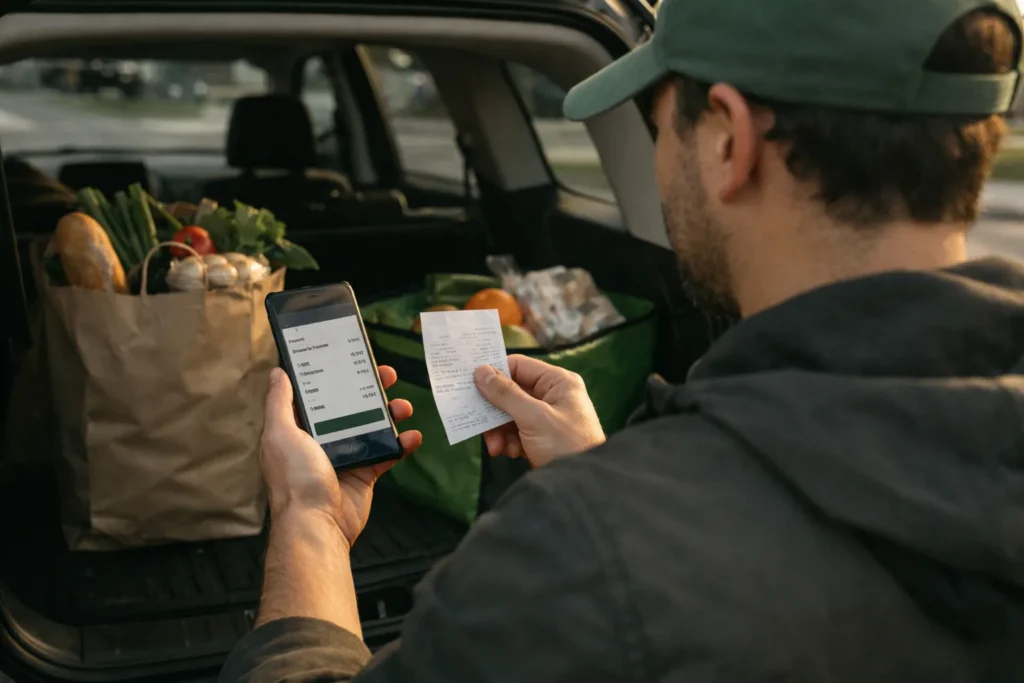
A cart that looks like $62 at the start of an order can reach $85 by the time you tap “place order.” The gap comes from fees, tips, and markups that are easy to overlook while you are busy picking items. Delivery has real value for people with limited time or mobility, so the point is not to avoid it, only to know what you are paying.
Where the extra dollars come from
The Federal Trade Commission has been paying attention to what it calls junk fees, meaning charges that are hidden, vague, or revealed late in the buying process. You can find consumer advice on the Federal Trade Commission website. Whatever the rules in your state, the practical lesson is the same: look at the final total, not the first price you see.
Typical add-ons include:
- Delivery fee. A flat charge that may drop or disappear above a minimum order size.
- Service fee. A percentage-based charge on top of the delivery fee, sometimes shown only at checkout.
- Small-order fee. A surcharge when your cart falls below a threshold.
- Item markups. Some services list higher shelf prices than the store charges in person, so compare a few items.
- Tip. A voluntary payment to the shopper or driver that you can adjust before and after delivery.
Do the math on a typical order
Suppose your groceries total $70. A $5 delivery fee, a $6 service fee, and a $9 tip add $20, or about 29% on top of the food. If you order every week, that is roughly $80 a month, or roughly $1,000 a year, before any price markup. Your own numbers will differ, so check your last three orders and add up what you paid beyond the groceries.
The Federal Reserve’s annual survey of household economics notes how many American households live without much of a cushion for unexpected costs, and it is a reminder that small recurring fees matter more than they seem. A monthly total that you can see is much easier to evaluate than one that arrives in pieces.
When pickup or a store trip costs less
Curbside pickup is often cheaper than delivery, and some stores offer it for free above a small minimum. A trip yourself costs gas and time, so it is not free, but a short drive can be cheaper than a delivery bundle. Consider mixing methods:
- Order delivery only for heavy or bulky items, or in weeks when you are sick or short on time.
- Use pickup or a quick in-store trip for the rest.
- Bundle one larger order instead of three small ones to cross the free-delivery threshold, as long as you do not buy extras just to reach it.
Tipping and fairness
Shoppers and drivers earn their living partly from tips, so cutting the tip is not an elegant way to save. Decide on a reasonable amount in advance and treat it as part of the cost of the service. If it does not fit your budget, choose a different method for that week instead.
A short pre-checkout routine
Before you confirm any order, scroll to the full cost breakdown and compare it with the groceries alone. Ask whether the convenience is worth the difference this week. Keep a note of what you paid in fees each month, and review it with your other statements.