



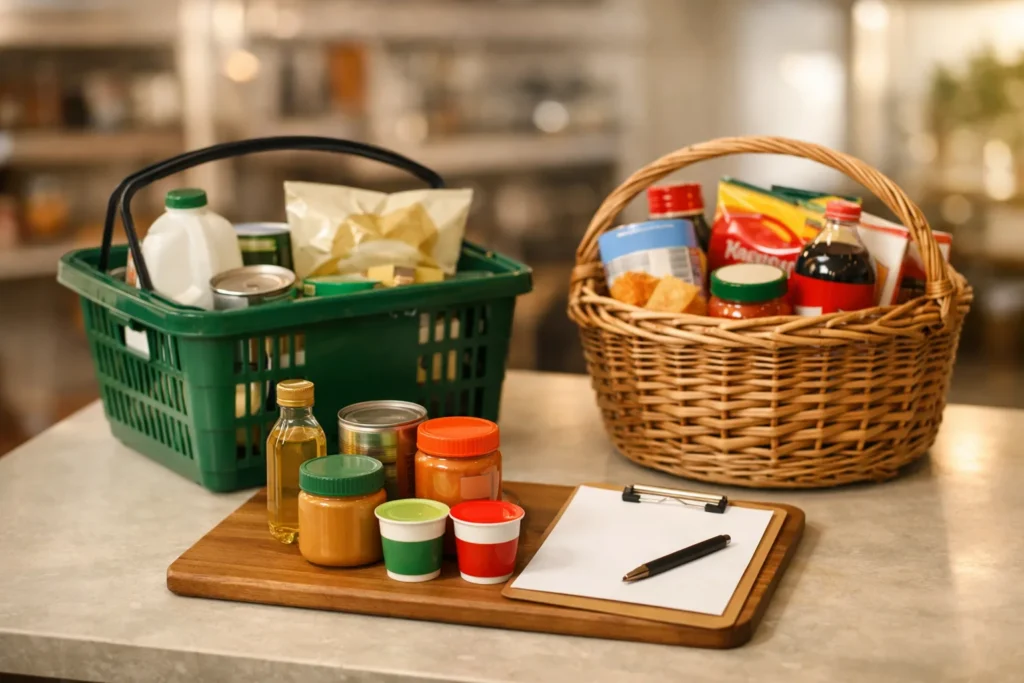
Store brands are often cheaper than national brands, but “often” is not “always,” and not every product is equal. Rather than trusting a rule of thumb, run a small experiment at home. A ten-item basket and an hour of shopping will tell you whether switching saves you real money.
Why use a basket
Government agencies do something similar on a much larger scale. The Bureau of Labor Statistics tracks the prices of a basket of goods and services to compute the Consumer Price Index, and the U.S. Department of Agriculture builds its food plans from typical grocery purchases. You do not need national statistics, only a representative list of what your household buys.
Build your test basket
Choose ten items you buy at least once a month. Aim for variety, so the result is not skewed by one category. A sample list could include:
- Pasta and canned tomatoes.
- Dry beans or canned beans.
- Flour, sugar, or rice.
- Peanut butter.
- Breakfast cereal or oatmeal.
- Frozen vegetables.
- Milk or a milk alternative.
- Cooking oil.
- Paper towels or trash bags.
- A snack your family eats weekly.
Compare fairly
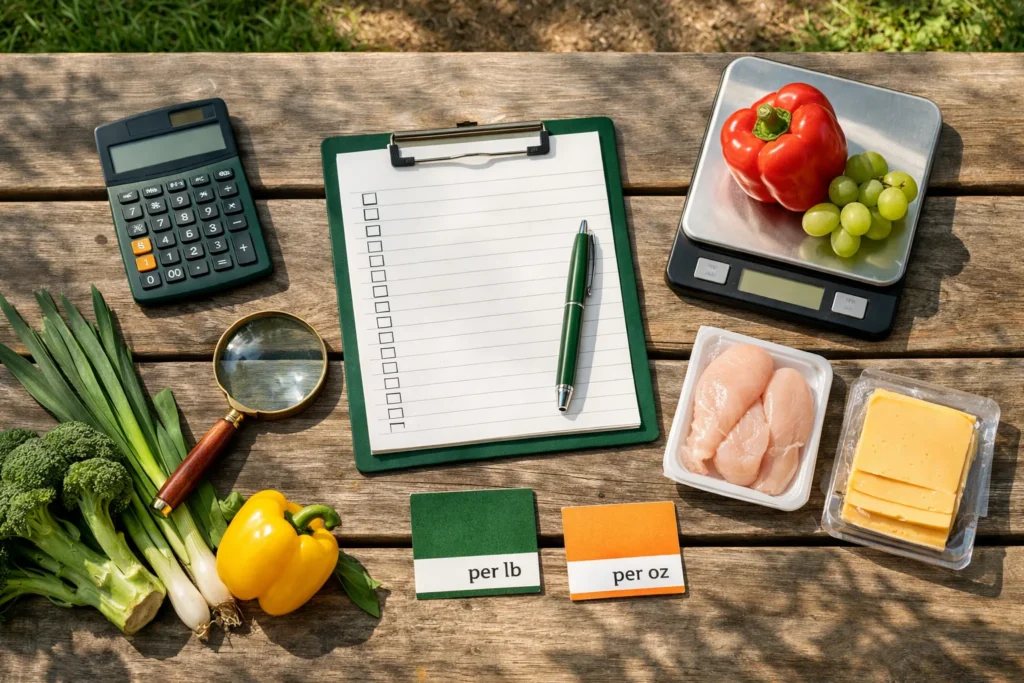
Write the name brand and the store brand next to each item on your list. Record the shelf price, the size, and the price per ounce or per count. Unit pricing is the key, because a larger package at a higher sticker price may be the cheaper option. If a package size differs between the two versions, trust the unit price, not the sticker.
- Use the same store. Compare both versions on the same visit to avoid mixing in differences between stores.
- Check sale prices separately. A name brand on sale can beat the store brand, and your notes should show that.
- Read the ingredients. A store version may have a different recipe, more salt, or fewer fruit pieces. Read the label before you decide it is equal.
- Taste test at home. Buy one store brand package first, and let your family vote before you switch for good.
Read the results
Total each column. Suppose the name-brand basket came to $38.40 and the store-brand basket to $29.60. The gap is $8.80 on a single trip. Multiply it by the number of similar trips in a month and you have an estimate of potential savings, which you can sanity-check against your actual receipts over the following weeks. Do not treat the result as guaranteed, because prices change and your choices do too.
Notice which items showed the biggest gap. Staples such as flour, canned vegetables, and frozen produce often show large differences with little change in quality for most cooks. Items where flavor matters to you, such as a particular snack or coffee, may be worth keeping as a name brand. A mixed approach is perfectly reasonable.
Watch for traps
Bigger is not always better. A jumbo package that expires before you can use it is not a bargain. Multi-buy deals that require you to buy three to get a discount can push you to purchase more than you need. And be careful with “shrinkflation,” where a package gets smaller while the price holds steady; unit prices expose it right away.
Repeat your basket every few months. Prices drift, new products appear, and a store brand that did not impress you last year might have improved.