
Thrift stores can trim a household budget quickly, but only if you shop with a plan. Buying a $4 item you do not need is no better than buying a $40 one, and a few categories of secondhand goods carry real safety questions. The nonprofit Goodwill runs stores across the country, and the same rules apply at most thrift shops, church sales, and community swaps.
Good candidates for buying used
Items that are sturdy, simple, and hard to damage tend to be the best deals. Cast iron pans, glass baking dishes, solid wood furniture, hardcover books, and wool or denim clothing often outlast their newer equivalents. Kids’ clothing is another strong category, because children outgrow things long before they wear them out. Look for tight seams, intact zippers, and fabric that has not pilled or faded unevenly.
Think of secondhand shopping as a way to pay less for quality. A well-made jacket for $12 beats a flimsy new one for $30, but a flimsy used one for $12 is still a waste.
Items to buy new, or inspect very carefully
Safety standards for children’s products change over time, and some used items may have been made before newer rules took effect. The Consumer Product Safety Commission publishes recalls and safety guidance, and it is smart to search it before you buy a crib, car seat, high chair, or any secondhand product made for babies. When in doubt, skip it. Helmets, mattresses, and anything with a damaged cord also belong on the cautious list, since a hidden defect is hard to spot in a store aisle.
Here is a quick comparison to carry in your head or on your phone.
| Item | Buy used or new | What to check | Where to look |
|---|---|---|---|
| Cast iron skillet | Used | No cracks or deep rust pits; flat bottom | Housewares aisle |
| Glass baking dish | Used | No chips, cracks, or cloudy spots | Housewares aisle |
| Children’s clothing | Used | Stains, missing buttons, loose seams | Kids’ racks |
| Wooden furniture | Used | Sturdy joints, no wobble, no mildew smell | Furniture section |
| Hardcover books | Used | Intact binding, no water damage | Book shelves |
| Crib or car seat | New | Recall notices and current safety rules | Skip the thrift aisle |
| Bike helmet | New | A damaged helmet may not protect you | Skip the thrift aisle |
| Mattress | New | Hygiene and hidden wear | Skip the thrift aisle |
| Small electronics | Used, with caution | Frayed cords, burn marks, working plug | Electronics shelf |
Before you pay: a short checklist
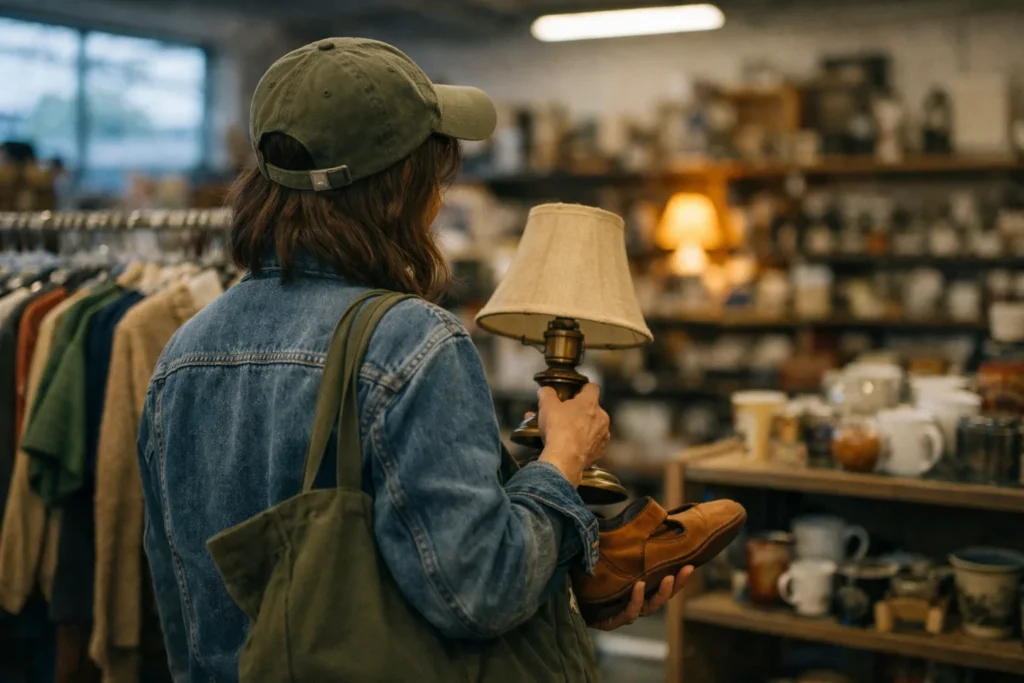
- Test what you can. Plug in lamps, zip zippers, open drawers, and sniff for smoke or mildew.
- Compare the price with new. If a used blender costs 80% of a new one, the new one with a warranty is the better deal.
- Know the return policy. Many thrift stores offer little or none, so decide with that in mind.
- Wash and disinfect. Launder clothing and wash hard goods before using them at home.
Shop with a list and a cap
The biggest budget risk in a thrift store is the “it’s only $3” effect. Go in with a short list, such as winter boots for a growing child or one serving platter, and set a spending cap before you walk through the door. Many stores rotate their stock constantly, so it is better to visit often with a short list than to wait for a rare perfect find.
Finally, remember the other half of the equation: donating what you no longer use keeps goods circulating and may give you a tax deduction if you itemize, so keep a receipt and ask a tax professional how your records should look.